RBI's Hawkish Pivot: Navigating 'Calibrated Tightening' Amidst Persistent Inflation
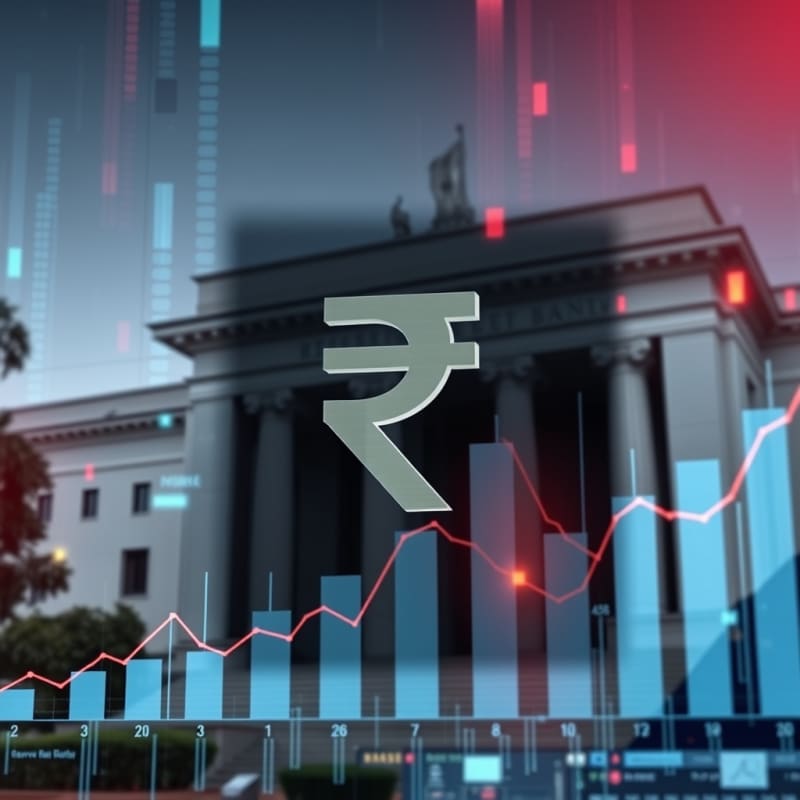
RBI Unanimously Hikes Repo Rate, Shifts Stance to 'Calibrated Tightening'
Mumbai, India – In a significant move signaling a renewed focus on price stability, the Reserve Bank of India's (RBI) Monetary Policy Committee (MPC) unanimously decided to increase the policy repo rate by 25 basis points to 5.50%. The decision, announced on October 7, 2026, following its three-day meeting from October 5-7, also saw the MPC change its monetary policy stance from 'neutral' to 'calibrated tightening'. This marks the first rate hike since February 2023, underscoring the central bank's growing concerns over persistent inflationary pressures and global economic uncertainties.
The recalibration of policy rates, which also saw the Standing Deposit Facility (SDF) rate adjusted to 5.25% and the Marginal Standing Facility (MSF) rate and Bank Rate revised to 5.75%, comes amidst a complex macroeconomic landscape. While India’s economy continues to demonstrate resilience with a robust growth outlook, the RBI has prioritized managing inflation, which has shown signs of broadening and persistence.
Rationale Behind the Hawkish Stance
The MPC's decision was primarily driven by several critical factors. Headline Consumer Price Index (CPI) inflation increased to 4.8% in August 2026 from 4.5% in July, fueled largely by higher food and fuel components. The central bank noted that food price increases have become more broad-based, with significant spikes in items such as sugar and onion. Fuel inflation also edged up due to unfavourable base effects. More recently, retail inflation jumped to 5.54% in September, further strengthening the case for hawkish policy.
Importantly, core inflation, excluding precious metals, also saw an increase to 4.2% in August, after remaining unchanged at 3.9% for three consecutive months, indicating a broadening of price pressures across the economy. The MPC expects CPI inflation to average nearly 5.8% over the next three quarters, with core inflation projected at 4.4% for the current financial year (FY27). This outlook is shaped by persistent volatility in global crude oil prices, renewed geopolitical tensions in West Asia, deficient southwest monsoon conditions, and ongoing El Niño effects.
Despite the inflationary headwinds, India's economic growth momentum remains strong. The RBI has projected real GDP growth for 2026-27 at 7.1%, supported by robust private consumption, investment activity, and exports. This relative strength in growth provides the central bank with the necessary space to address inflation without significantly impeding economic activity.
Implications for Financial Markets and Businesses
The shift to 'calibrated tightening' signals that while aggressive rate hikes may not be the immediate path, rate cuts are definitively off the table in the near term. Future policy decisions will be highly contingent on evolving inflation and growth conditions.
Fixed Income Markets
The repo rate hike is expected to exert upward pressure on market yields, particularly depressing prices of existing long-duration bonds. However, newly deployed capital can lock in higher yields in short-to-medium duration instruments, benefiting fixed income investors seeking better returns. Banks will likely adjust their deposit and lending rates in response, with new and renewing Fixed Deposits (FDs) benefiting from higher rates as banks compete for liquidity.
Equity Markets
For equities, higher discount rates stemming from rising interest rates could put pressure on valuations. Companies with high leverage may face increased interest costs, impacting their profitability. Conversely, debt-free companies with strong pricing power and robust cash flows are likely to remain more resilient in this environment.
Banking and Financial Services
The banking sector's profitability will hinge on its ability to reprice lending yields faster than the cost of funds. While higher deposit rates could increase funding costs, banks with strong asset quality and efficient liability management will be better positioned to navigate the tighter monetary regime. The move also impacts the broader credit environment, potentially slowing down credit growth as borrowing becomes more expensive for both businesses and consumers. This will translate into higher EMIs for floating-rate loans.
The Road Ahead
The RBI's October policy statement is a clear indication that containing inflation has once again taken precedence in the monetary policy framework. Economists widely anticipate the possibility of further 25 basis point hikes in upcoming MPC meetings, particularly in December, if inflation pressures continue to mount as projected by the central bank. The central bank's baseline assumption for crude oil prices at $95/bbl for the second half of FY27 further suggests a cautious outlook on imported inflation.
For investors, businesses, and individuals, the message is unequivocal: a period of higher interest rates is likely to persist. Strategic financial planning must account for a more stringent credit environment and continued vigilance on inflation. The RBI's pivot underscores its commitment to anchoring inflation expectations, ensuring the long-term stability and sustainability of India's growth trajectory.
Balaji K


Comments
Post a Comment