Bihar's Green Hydrogen Policy: A State-Level Catalyst for India's Ambitious Energy Transition
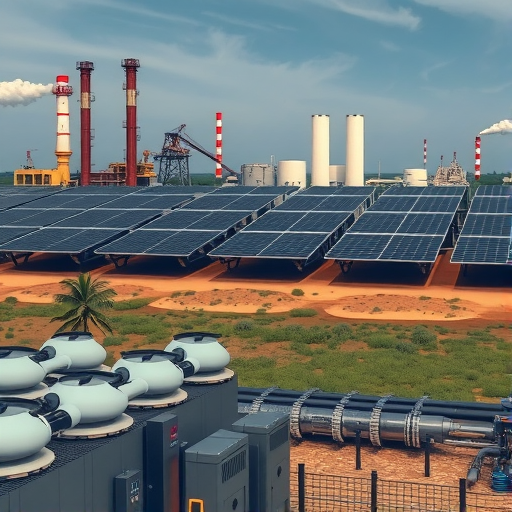
Charting a Greener Course: Bihar's Bold Step in Green Hydrogen
The landscape of India's energy transition is witnessing a pivotal shift, with individual states now stepping up to complement the ambitious national agenda. A significant development this week comes from Bihar, which on April 17, 2026, unveiled its draft "Bihar Green Hydrogen Policy 2026." This forward-looking policy is set to carve out a substantial role for the state in India's burgeoning green hydrogen economy, underscoring a concentrated push towards decarbonisation and energy independence.
This state-level initiative is not an isolated event but a critical cog in the much larger machinery of India's National Green Hydrogen Mission (NGHM), launched in January 2023. The NGHM aims to position India as a global hub for green hydrogen production, usage, and export, targeting an impressive annual production capacity of 5 million metric tonnes (MMT) by 2030. This national mission envisions attracting over ₹8 lakh crore (approximately USD 95.9 billion) in investments and creating 600,000 jobs by the end of the decade, while also abating nearly 50 MMT of annual greenhouse gas emissions.
Bihar's Specifics: Incentives and Ambitions
Bihar's new policy, valid for five years, lays out a clear roadmap for fostering a robust green hydrogen and green ammonia ecosystem. The state aims to achieve a production capacity of 1 lakh tonnes (100,000 metric tons) of green hydrogen or green ammonia annually by 2031. To support this target, Bihar plans to develop approximately 1 gigawatt (GW) of electrolyzer capacity and 2.5 GW of dedicated renewable energy capacity. Such large-scale development is projected to attract investments worth nearly ₹16,000 crore (approximately USD 1.71 billion) and create around 12,000 jobs, both direct and indirect.
A key aspect of Bihar's policy is its comprehensive suite of incentives designed to draw in investors and accelerate project development. These include an exemption from electricity duty, reimbursement of State Goods and Services Tax (SGST), and a crucial waiver of transmission and wheeling charges for renewable energy utilized in green hydrogen production. Further bolstering the investment climate are exemptions from stamp duty and land conversion charges, alongside the promise of a single-window clearance mechanism for streamlined project approvals. The policy also offers financial support, with developers eligible for 20% of sanctioned production-linked incentives, capped at ₹50 million (~USD 532,775) per project. Startups in electrolyzer manufacturing and hydrogen production are slated to receive special incentives, and a Renewable Energy Development Fund will support skill development and R&D facilities.
Market Dynamics and Investment Outlook
The announcement of Bihar's policy highlights the growing momentum at the state level, complementing central government efforts like the Strategic Interventions for Green Hydrogen Transition (SIGHT) program, which has an outlay of ₹17,490 crore for electrolyzer manufacturing and green hydrogen production. Already, India's commissioned green hydrogen capacity has reached approximately 8,000 tonnes per annum (TPA) by February 2026, an early but significant step towards the 2030 target.
However, the path to a fully scaled green hydrogen economy is not without its challenges. The current production costs for green hydrogen in India remain relatively high, with competitive bidding revealing prices in the range of ₹387-397 per kg (including 18% GST). This is notably above the government's long-term target of approximately USD 1.5/kg (roughly ₹125/kg), indicating the need for continued technological advancements and cost reductions. Renewable power, primarily solar and wind, constitutes 50-70% of the production cost, underscoring the critical importance of low-cost renewable energy for cost competitiveness.
Despite these hurdles, the long-term investment opportunity remains compelling. Major Indian conglomerates such as Reliance Industries, Adani Group, NTPC, GAIL, and Larsen & Toubro are already making significant strides in developing green hydrogen projects across the value chain, from electrolyzer manufacturing to production and distribution. State-level policies, like that of Bihar, are crucial in creating localized demand, facilitating infrastructure development, and providing the necessary regulatory clarity to de-risk investments.
Conclusion: A Blueprint for Distributed Green Growth
Bihar's Green Hydrogen Policy 2026 serves as an exemplary model for how states can actively contribute to India's national energy goals. By offering targeted incentives and a supportive framework, Bihar is not only positioning itself as a key player in this nascent industry but also creating a blueprint for other states to follow. The success of such initiatives will hinge on effective implementation, consistent policy support, and sustained private sector participation. As India marches towards its net-zero emissions target by 2070 and strengthens its energy security, the distributed efforts of states like Bihar will be instrumental in transforming the nation into a global leader in green hydrogen, fostering both economic growth and environmental sustainability.
Balaji K


Comments
Post a Comment