India's Digital Payments Face a 'Cash Paradox' as UPI MDR Reshapes Transaction Dynamics
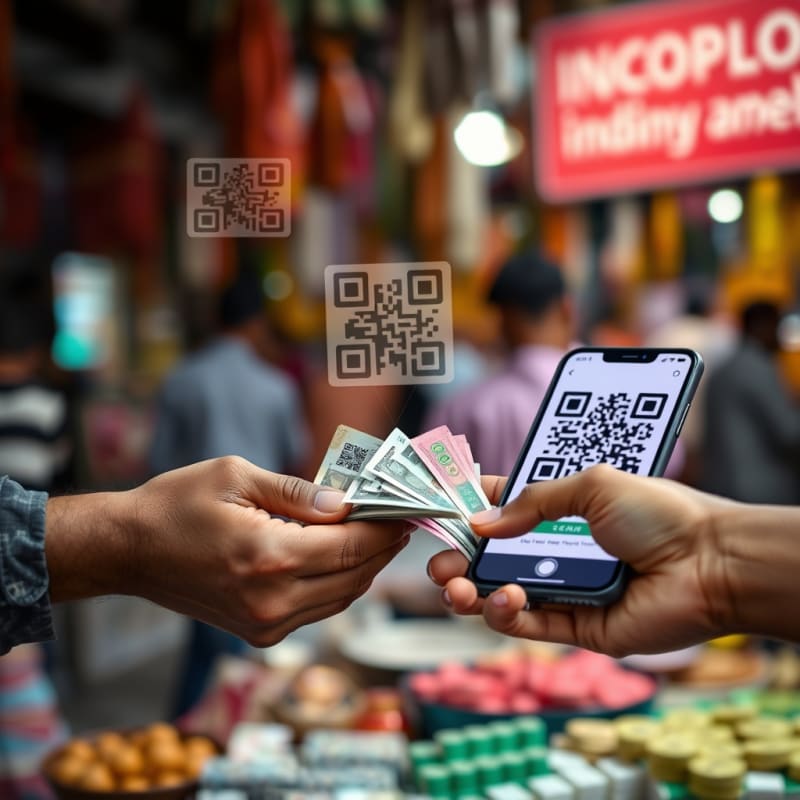
The Unforeseen Ripple: UPI's Merchant Discount Rate and the Resurgence of Cash
India's ambitious journey towards a cashless economy is confronting an unexpected recalibration. The introduction of a Merchant Discount Rate (MDR) on larger Unified Payments Interface (UPI) transactions, effective from mid-October 2026, has initiated a significant shift in payment behaviour, particularly within the nation's vast informal economy. This policy adjustment, which marks a departure from the long-standing zero-fee regime, has not only sparked debate among businesses and consumers but also highlighted a 'cash paradox' that challenges the prevailing narrative of digital dominance.
From Zero-Fee Revolution to Calibrated Monetisation
For years, UPI has been lauded globally as a groundbreaking public digital infrastructure. Its zero-cost model, implemented in January 2020, was instrumental in accelerating digital adoption, transforming India into a leader in real-time retail payments. The platform now processes more than 24 billion transactions a month, a testament to its widespread acceptance and ease of use.
However, the sustainability of a zero-MDR model for payment service providers has long been a point of contention. To address this, authorities have introduced a new structure: merchants accepting UPI payments above ₹2,000 are now subject to a 0.4 per cent Merchant Discount Rate, capped at ₹300 for very large amounts. Importantly, everyday smaller payments and all person-to-person transfers continue to remain free for consumers.
The 'Cash Paradox' Unpacked
The immediate aftermath of this policy change has been the emergence of a 'cash paradox'. Despite the monumental growth in digital transactions, currency in circulation continues to expand at double-digit rates, having recently risen by approximately 13 per cent year-on-year. This phenomenon, observed by Reserve Bank of India (RBI) officials, suggests that while digital tools effectively displace cash in routine, smaller payments, the overall stock of physical currency persists due to precautionary holdings, robust rural demand, and, critically, activity within the informal sector that remains outside formal records.
The new MDR is exacerbating this trend. Merchants, particularly those operating on thin margins, are understandably reluctant to absorb the additional cost. Many are quietly, or sometimes overtly, steering customers towards cash for higher-value purchases to avoid the levy. Traders' groups have openly indicated their intention to promote cash for such transactions. Surveys suggest a notable share of users are willing to switch to cash or cards if merchants pass on the expense.
Implications for Businesses and the Informal Economy
For businesses, especially small and medium enterprises (SMEs), the MDR introduces a new cost layer. While the intent might be to ensure the viability of the payment infrastructure, the practical outcome for many could be a disincentive for digital acceptance, particularly for transactions just above the ₹2,000 threshold. This creates a friction point that the earlier zero-MDR regime had effectively eliminated, potentially hindering broader digital inclusion efforts in segments of the economy.
The informal sector, which still accounts for a significant portion of India's employment and output, relies heavily on cash for its inherent flexibility, anonymity, and the absence of settlement delays or fees. High-value informal transactions—ranging from private tuition and home repairs to construction work and certain professional services—have historically favoured physical notes precisely because they leave no digital trail. The reintroduction of a cost on digital transactions for merchants further entrenches this preference, potentially slowing the formalisation process that digital payments were intended to accelerate.
Future of Fintech and Digital Innovation
This development poses a critical challenge for India's burgeoning fintech ecosystem. While the sector saw robust funding, raising $2.2 billion in equity funding between January and September 2026 (a 14% increase year-on-year), even as the number of funding rounds fell by 41% to 153 deals, indicating a focus on larger, more established players, the fundamental economics of payment processing are now being re-evaluated. Payment providers will need to innovate, perhaps by offering enhanced value-added services that justify the MDR for merchants, or by developing new models that absorb or circumvent the charges. The current landscape necessitates a strategic pivot, moving beyond volume to focus on monetisation and the creation of services that genuinely improve merchant profitability.
Navigating the Road Ahead
The 'cash paradox' underscores the complex interplay between policy, technology, and socio-economic behaviour in a diverse economy like India's. While UPI remains a formidable force in the payments landscape, the new MDR is a critical test of its adaptability and the broader digital payments ecosystem's resilience. Investors and businesses must closely monitor how this policy evolves, its impact on transaction volumes, merchant behaviour, and the strategies adopted by fintech companies to sustain growth and value in a monetised environment. The balance between fostering digital adoption and ensuring the economic viability of payment infrastructure will define the next chapter of India's digital finance story.
Balaji K


Comments
Post a Comment