India's Industrial Evolution: A Strategic Deep Dive into Advanced Manufacturing and Critical Minerals
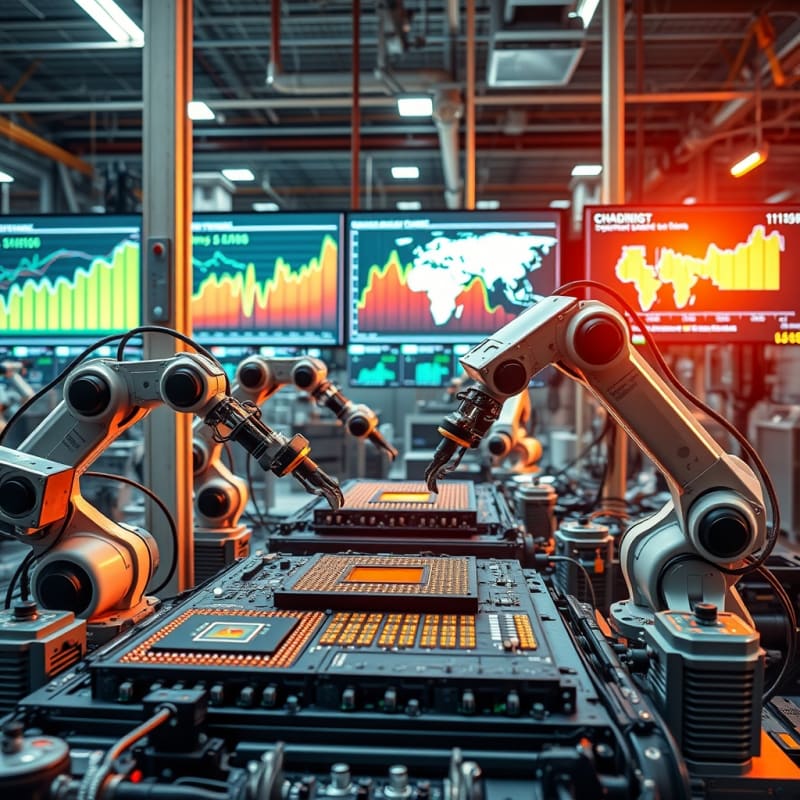
Shifting Gears: India's Renewed Focus on High-Value Manufacturing
In a strategic recalibration of its industrial policy, India is aggressively pursuing self-reliance and global competitiveness in critical, high-technology sectors. Recent assessments from leading industry bodies and government updates, published last week, underscore the significant momentum gained by the nation's Production Linked Incentive (PLI) schemes. Reports from the Confederation of Indian Industry (CII) on September 25, 2026, and an ASSOCHAM Global Research report on September 27, 2026, highlighted a discernible shift in India's 'Make in India' initiative towards deeper technological capabilities and domestic value addition in areas such as semiconductors, green hydrogen components, and rare earth processing.
This evolving policy framework builds upon existing blueprints like the India Semiconductor Mission 2.0, the National Green Hydrogen Mission, and the Rare Earth Permanent Magnet (REPM) Manufacturing Scheme, signaling a determined government push to enhance domestic value chains, mitigate global supply chain vulnerabilities, and position India as a formidable player in future-ready technologies. The broader PLI umbrella has already attracted substantial investment, reaching over ₹2.40 lakh crore (approximately US$27.27 billion as of June 2026) across 14 sectors, with incremental production and sales surpassing ₹20 lakh crore by December 2025. This substantial commitment reflects a clear recognition that mastering core components and foundational technologies is paramount for 21st-century economic sovereignty.
Targeted Incentives Driving Strategic Sector Growth
The current phase of India’s PLI initiative is far from a mere extension of existing programs. It represents a targeted pivot towards sectors deemed crucial for national security, economic resilience, and long-term industrial competitiveness. For instance, the India Semiconductor Mission 2.0, announced in July 2026, commands an allocation of INR 1.275 trillion (US$13.23 billion). This mission significantly broadens government support across the semiconductor ecosystem, spanning chip design, fabrication, display manufacturing, advanced packaging, and R&D.
Under this robust framework, semiconductor manufacturing units can receive up to 50% fiscal support for setting up fabrication facilities, along with capital expenditure incentives for equipment manufacturers. Stringent eligibility criteria, including minimum investment thresholds and employment generation targets, ensure that only serious players with long-term commitments benefit. This focused approach aims to reduce India's reliance on global chip imports, a vulnerability starkly exposed during recent global supply chain disruptions. Similarly, the National Green Hydrogen Mission, approved in January 2023, targets the development of at least 5 million metric tonnes of green hydrogen production annually by 2030, supported by an associated addition of approximately 125 GW in renewable energy capacity. The mission includes Strategic Interventions for Green Hydrogen Transition (SIGHT) schemes to incentivize electrolyser manufacturing, fostering a self-sustaining ecosystem for India's green economy.
Furthermore, the Rare Earth Permanent Magnet (REPM) Manufacturing Scheme, approved in November 2025 with an outlay of ₹7,280 crore (approximately US$875 million), aims to establish 6,000 MTPA of integrated REPM manufacturing capacity. This initiative is critical for addressing geopolitical imperatives and reducing import dependency, particularly on China, which dominates global rare earth processing.
Economic Momentum and Investor Landscape
The economic implications of this renewed policy thrust are substantial. India’s manufacturing Gross Value Added (GVA) at constant prices recorded a compound annual growth rate of 10.88% between 2022-23 and 2025-26, indicating a strong positive response to these industrial policies. Foreign Direct Investment (FDI) inflows have also demonstrated robust growth, with India recording its highest-ever annual FDI inflow of $94.53 billion in FY 2025-26. Cumulative FDI inflows from FY 2014-15 to FY 2025-26 have reached $843 billion, signaling sustained international investor confidence.
Industry reports confirm that PLI schemes have already supported the creation of over 14.6 lakh direct and indirect jobs as of June 2026. For domestic and international investors, this policy signals significant opportunities across sectors such as electronic components, specialized chemicals, advanced materials, and renewable energy equipment. The 'Make in India' narrative is evolving, moving beyond traditional manufacturing to encompass high-technology, knowledge-intensive industries crucial for global supply chain resilience.
Navigating Challenges and Future Trajectories
Despite the immense potential, India's ambitious foray into advanced manufacturing is not without its challenges. The global landscape for semiconductor and rare earth processing capabilities is fiercely competitive, necessitating concerted efforts to attract cutting-edge technology and a highly skilled talent pool. Effective implementation, swift regulatory clearances, and the ability to adapt to technological advancements will be crucial for the sustained success of these initiatives. Furthermore, ensuring that the incentives primarily drive genuine domestic value addition rather than simply attracting assembly operations, and guarding against inefficient resource allocation, will require vigilant monitoring and periodic policy adjustments. The substantial fiscal outlays, while significant, are viewed by the government as necessary investments for ensuring future economic security and technological self-reliance.
In conclusion, India’s strategic pivot towards advanced manufacturing and critical minerals, reinforced by recent industry analyses, marks a pivotal evolutionary step in its industrial policy. It signifies a determined shift towards fostering high-value, technologically advanced sectors that are fundamental to economic prosperity and strategic autonomy in the 21st century. For businesses and investors navigating a dynamic global economy, this policy provides both substantial opportunities and a clear directional signal of where India's industrial future is being forged. The coming months will be critical in observing how this ambitious vision translates into sustained investments, robust domestic capabilities, and enhanced global competitiveness on the ground.
Balaji K


Comments
Post a Comment