UPI's Global Leap: India Pioneers Cross-Border CBDC Integration for Seamless Payments
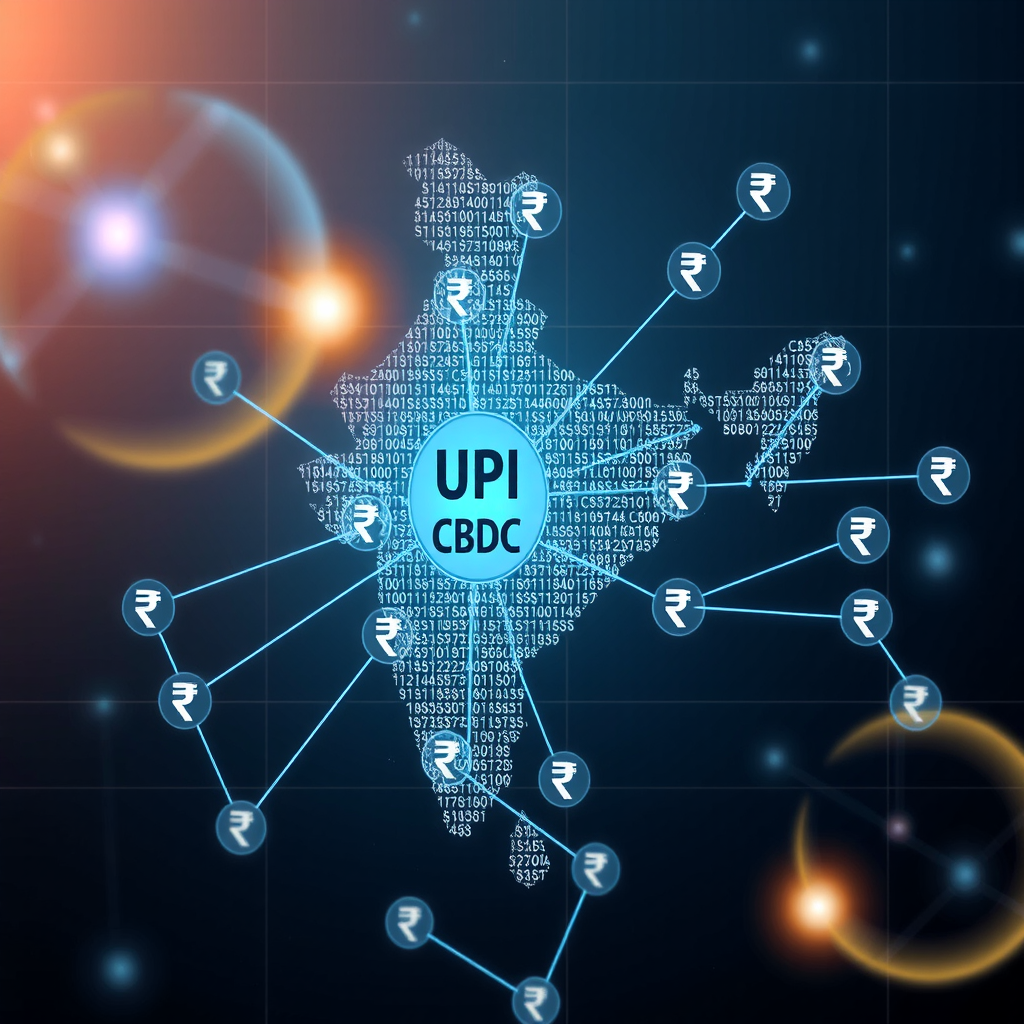
India at the Forefront of Global Digital Payment Innovation
In a significant stride towards reshaping the global financial landscape, India has accelerated its efforts to integrate its ubiquitous Unified Payments Interface (UPI) with Central Bank Digital Currencies (CBDCs) for cross-border transactions. This past week saw tangible progress and renewed commitments from the Reserve Bank of India (RBI) and its international partners, signaling a new era for remittances and trade finance. The move solidifies India's position as a burgeoning global fintech infrastructure hub, with its fintech sector projected to reach an astounding USD 421 billion by 2029.
Unlocking Efficiency: The UPI-CBDC Synergy
The vision is clear: to leverage the efficiency and real-time nature of UPI, a system that already boasts over 500 million active users and processes over 20 billion transactions monthly within India, with the sovereign backing and inherent trust of CBDCs. This integration is not merely a technological upgrade but a strategic pivot aimed at drastically reducing the costs and time associated with international money transfers. For years, the friction in cross-border payments has been a persistent challenge for businesses and individuals alike, hindering economic growth and financial inclusion. With India's economy projected to reach $7.5 trillion in the next seven years, and remittances potentially constituting $1 trillion of that, faster credit of remittances is crucial for economic acceleration.
The RBI's strategic roadmap for 2026-27 explicitly outlines the pursuit of bilateral and multilateral cross-border CBDC pilots, focusing on select use-cases. Initial corridors, such as those with Singapore and the UAE, are being prioritised, building on strong trade and remittance linkages and existing payment cooperation. These pilots are designed to explore asset tokenisation, programmable money, and welfare applications, moving CBDC from a limited domestic trial to a more strategic policy tool.
Market Implications: A Paradigm Shift for Financial Services
For the financial services industry, this development presents both immense opportunities and formidable challenges. Traditional banks, long accustomed to legacy correspondent banking networks, must now adapt to a rapidly evolving digital ecosystem. The integration of UPI with CBDCs for cross-border payments will necessitate significant investments in technological infrastructure and a re-evaluation of current business models. However, it also opens avenues for offering innovative, low-cost, and high-speed payment solutions, potentially attracting a broader customer base, especially in the remittance market, which is valued at USD 105 billion for India.
Fintech innovators are particularly well-positioned to capitalise on this trend. As India emerges as a global fintech infrastructure hub, companies specialising in product engineering, artificial intelligence, and cross-border infrastructure will find fertile ground for growth. The shift also implies that India's regulatory frameworks, including UPI and account aggregator systems, may serve as models for other nations, fostering greater international collaboration and investment into India's fintech startups.
Boosting Trade and Remittances
The immediate beneficiaries of seamless cross-border UPI-CBDC payments will be exporters, importers, and the vast Indian diaspora. Reduced transaction fees and faster settlement times will significantly cut operational costs for businesses engaging in international trade, particularly for Micro, Small, and Medium Enterprises (MSMEs) looking to expand their global footprint. For individuals sending and receiving remittances, the benefits are even more profound. The elimination of exorbitant transfer fees and delays means more money reaches its intended recipients quicker, bolstering household incomes and contributing to financial stability. UPI's global transaction volumes crossed 1 million in FY26, nearly doubling from the previous year, demonstrating the growing international appetite for India's digital payment solutions.
Navigating the Path Ahead: Challenges and Regulatory Harmony
While the potential is transformative, the path to widespread adoption is not without its hurdles. Regulatory harmonisation across different jurisdictions remains a critical challenge. Ensuring interoperability between various CBDC frameworks and existing UPI rails requires robust technical and governance standards, a key focus for the RBI's engagement in multilateral projects. Cybersecurity and data privacy concerns will also demand robust frameworks to safeguard transactions and user information in an increasingly interconnected digital world. The success of these initiatives will hinge on collaborative efforts between central banks, governments, and private sector participants to build trust and ensure a secure, efficient, and inclusive global payment system. India's ongoing discussions with various countries, including the integration of Indonesia's QRIS payment system with UPI by the end of 2026, exemplify the country's proactive approach to expanding its digital payment footprint globally.
Conclusion: A Digital Diplomacy Paved by Innovation
India's pioneering efforts in integrating UPI with cross-border CBDCs underscore a strategic vision for digital diplomacy. By offering a low-cost, scalable, and inclusive alternative to traditional payment systems, India is not just participating in the global technology conversation; it is actively shaping it. This move is set to redefine how capital flows across borders, fostering greater economic integration and cementing India's role as a leader in the next generation of global financial infrastructure.
Balaji K


Comments
Post a Comment