India's Monsoon Enigma: A Looming Macro Risk Amidst Economic Optimism
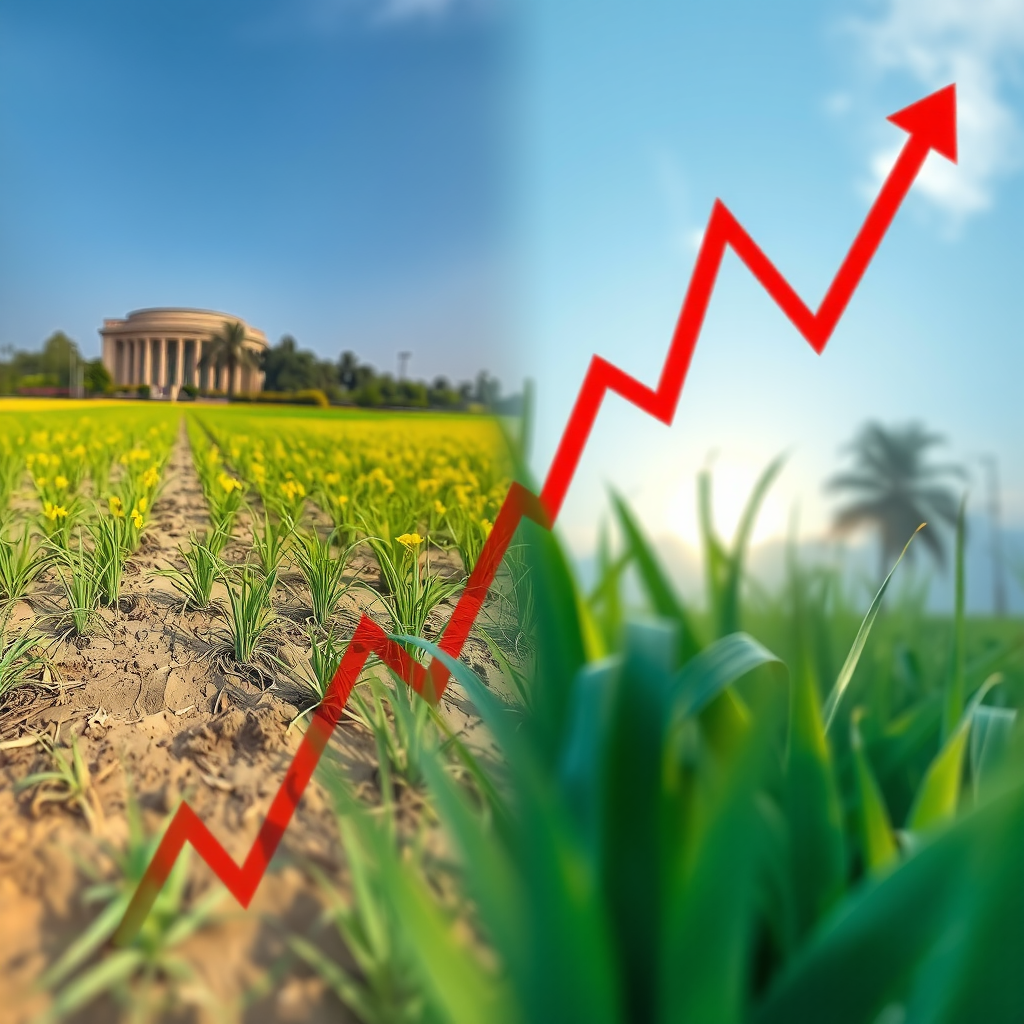
The Shifting Sands of India's Economic Outlook
India's economic narrative has, in recent quarters, been largely characterized by resilience and robust growth, often defying global headwinds. Goldman Sachs recently upgraded India's 2026 calendar year GDP growth forecast to 6.8%, an increase of 30 basis points, attributing this optimism to lower oil prices and easing supply disruptions following the US-Iran peace deal. This positive sentiment was further bolstered by recent data indicating healthy industrial production, strong exports, and robust foreign investment. However, a new, potentially significant macro risk is emerging on the horizon: the performance of the crucial Southwest Monsoon. While lower crude oil prices have indeed provided a substantial boost, the spectre of below-normal rainfall, exacerbated by a strengthening El Niño, poses a formidable challenge to India's inflation trajectory and broader economic stability, demanding a careful reassessment of investment strategies.
Monsoon's Pivotal Role in the Indian Economy
The Southwest Monsoon is not merely a seasonal weather phenomenon; it is the lifeblood of India's agricultural sector, which contributes roughly 15% to the nation's GDP and employs approximately 45% of the workforce. Accounting for about 70% of India's annual rainfall, its performance has an outsized influence on food prices, rural demand, and consequently, overall economic output. A bountiful monsoon often translates into higher agricultural output, increased rural incomes, and suppressed food inflation, creating a virtuous cycle for consumption and broader economic growth. Conversely, a deficient monsoon can trigger a cascade of negative effects, threatening to unravel some of the hard-won macroeconomic stability.
Current Projections: A Cause for Concern
Recent reports paint a concerning picture. June rainfall ran an alarming 40% below normal, raising immediate red flags. Compounding this, the India Meteorological Department (IMD) has projected below-normal rainfall across much of the country for July 2026, a critical month for sowing and early crop establishment during the Kharif season. Adding to the apprehension is the confirmed strengthening of El Niño conditions over the Pacific Ocean, a phenomenon historically associated with weaker monsoon rainfall over India. Nomura's Chief Economist, Sonal Varma, underscored this risk, suggesting that the rainfall shortfall could exceed the roughly 10% currently projected by forecasters, potentially leading to a monsoon season worse than the consensus meteorological view.
The Inflationary Nexus and Policy Dilemma
The most immediate and palpable threat from a weak monsoon is a potential resurgence in food inflation. A 10% rain deficit, for instance, could add as much as one percentage point to headline consumer inflation driven by food prices, according to research by Yuvika Singhal, an economist at QuantEco Research. While India's core inflation, excluding precious metals, has been running comparatively soft at about 2% to 2.5%, a significant spike in food prices could quickly elevate the overall Consumer Price Index (CPI). This presents a delicate balancing act for the Reserve Bank of India (RBI). In its June 2026 Monetary Policy Committee (MPC) meeting, the RBI unanimously voted to keep the repo rate unchanged at 5.25%, maintaining a neutral policy stance. The central bank also cut its FY27 GDP growth forecast to 6.6% from 6.9% and raised its inflation forecast to 5.1% from 4.6%, citing global factors. A severe monsoon shortfall, however, could intensify inflation risks domestically, potentially forcing the RBI to reconsider its current policy stance and perhaps even contemplate rate hikes, thereby dampening growth momentum.
Impact on Rural Demand and Investment Trends
Beyond headline inflation, a deficient monsoon profoundly impacts the rural economy. Reduced agricultural yields translate into lower farm incomes, which in turn dampen rural wage growth and consumer spending. This ripple effect extends to sectors heavily reliant on rural demand, such as fast-moving consumer goods (FMCG), two-wheelers, and agricultural inputs. Investors should closely monitor rural demand indicators and food-production data, as these metrics will provide crucial early insights into whether India's improving economic outlook can continue its trajectory. Sectors that demonstrated resilience or positive momentum earlier in the year due to factors like lower oil prices might face renewed pressure. The shift in macro risk from external (oil prices, geopolitical tensions) to internal (monsoon performance) necessitates a recalibration of investment theses.
Conclusion: Navigating the Monsoon's Shadow
India's economy stands at an interesting juncture, caught between the tailwinds of easing global commodity prices and the potential headwind of an unpredictable monsoon. While the positive revisions to GDP forecasts and the sustained government push for infrastructure development – with a planned ₹12.2 lakh crore for 2026-27 – provide a strong foundational outlook, the performance of the monsoon in July and August will be critical. Businesses, particularly those with significant exposure to rural markets or those in the food processing and agricultural value chains, must build contingency plans for potential demand compression and input cost inflation. Investors, meanwhile, should adopt a cautious yet agile approach, prioritizing companies with strong balance sheets, diversified revenue streams, and a proven ability to navigate challenging operating environments. The coming weeks will reveal whether India's economic resilience can once again weather the monsoon's caprice, or if the El Niño-induced dry spell will cast a longer shadow over its growth ambitions.
Balaji K


Comments
Post a Comment