India's Semiconductor Ambition: Charting a $150 Billion Future Amid Global Dynamics
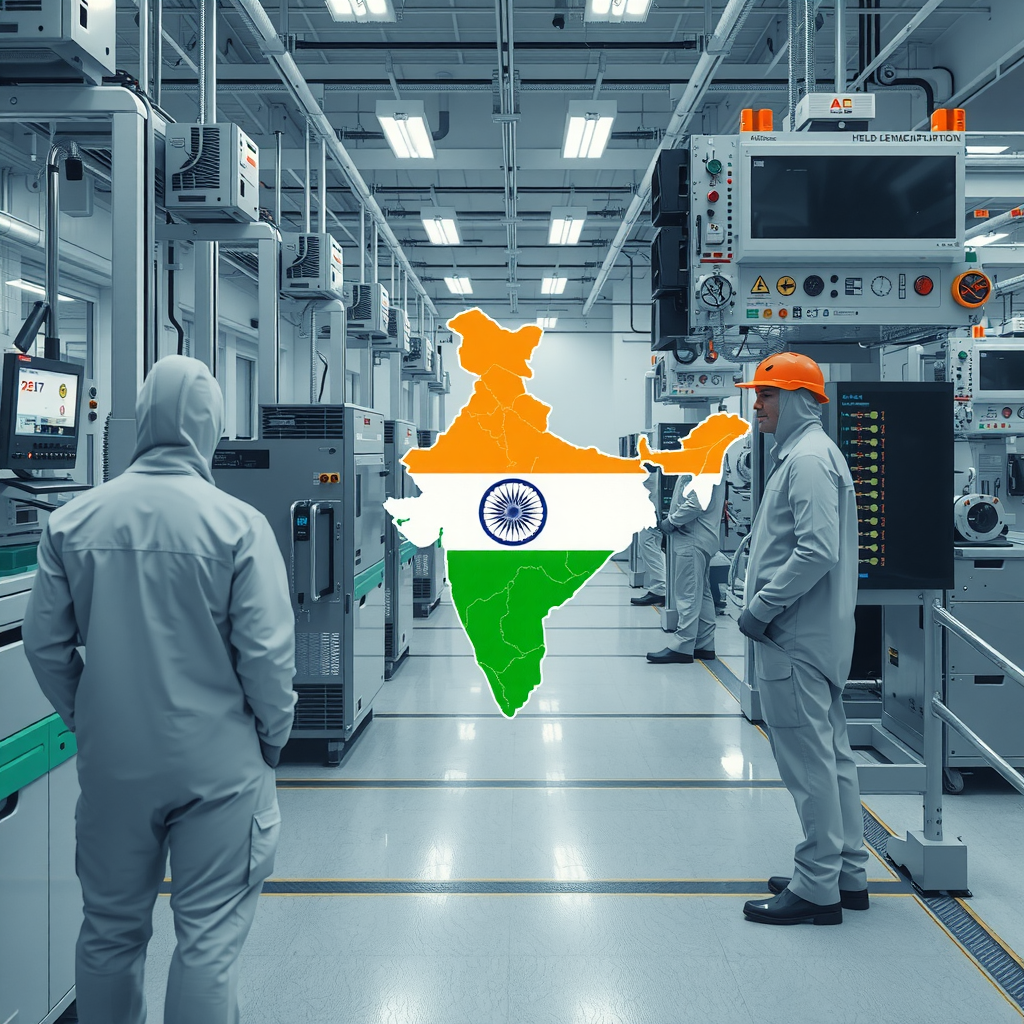
A Pivotal Moment for India's Technological Sovereignty
India's pursuit of a robust domestic semiconductor ecosystem has entered a decisive phase, marked by the release of a comprehensive roadmap and accelerated project approvals. On May 29, 2026, the NITI Aayog's Frontier Tech Hub unveiled its ambitious 10-year roadmap, 'Future of India's Semiconductor Industry,' charting a course for the nation to establish a USD 120–150 billion semiconductor value chain by 2035. This landmark document reinforces the strategic intent behind the 'India Semiconductor Mission' (ISM), positioning chips as foundational infrastructure for national security, economic resilience, and digital sovereignty.
The roadmap’s release, coinciding with the momentum generated by the Union Budget 2026-27's announcement of ISM 2.0, signifies a strategic recalibration. The focus has shifted from initial ecosystem creation to deepening capabilities across design, advanced manufacturing, materials, packaging, talent development, and robust R&D. This reflects a pragmatic understanding that semiconductor leadership demands sustained, mission-mode commitment over the long term.
Unprecedented Investment and Project Acceleration
The past few weeks have witnessed tangible progress on the ground. On May 5, 2026, the Union Cabinet approved two additional semiconductor projects under the ISM, bringing the total count of sanctioned facilities to 12 across six states. These projects represent cumulative investments of approximately INR 1.64 lakh crore. These approvals underscore the government’s aggressive push, building on the initial INR 76,000 crore (~US$10 billion) incentive framework launched in 2021.
A standout development occurred on May 16, 2026, when Tata Electronics and Dutch semiconductor equipment giant ASML signed a strategic agreement to bolster India's first front-end semiconductor fabrication plant in Dholera, Gujarat. This colossal project, backed by an estimated investment of nearly US$11 billion, is envisioned to manufacture semiconductor chips primarily for critical sectors such as automotive electronics and mobile devices. The Dholera site itself received Special Economic Zone (SEZ) status on April 9, 2026, streamlining regulatory processes and logistics. Further, the recently inaugurated Assembly, Test, Marking, and Packaging (ATMP) facility by Micron Technology in Sanand, Gujarat, has commenced commercial production, marking a significant operational milestone. A new ATMP/OSAT facility in Bhiwadi, Rajasthan, also opened its doors on May 15, 2026, notably being the first semiconductor unit established outside the direct purview of the ISM.
Strategic Imperatives and Market Implications
India's fervent drive into semiconductor manufacturing is propelled by a confluence of economic and geopolitical imperatives. The nation currently imports upwards of 80-90% of its semiconductor requirements, creating vulnerabilities to global supply chain disruptions and geopolitical risks. Building domestic capacity is crucial for technological self-reliance and securing the digital backbone of a rapidly expanding economy. The domestic semiconductor market, valued at approximately US$38 billion in 2023, is projected to surge to around US$109 billion by 2030, fueled by burgeoning demand from smartphones, automotive electronics, industrial automation, and data centers.
For investors and businesses, this policy push translates into significant opportunities across the value chain. Companies involved in electronics manufacturing, advanced packaging, power electronics, and design services are poised to be direct beneficiaries. The Production Linked Incentive (PLI) and Design Linked Incentive (DLI) schemes continue to attract domestic and foreign investment, fostering an ecosystem ripe for innovation and growth. The creation of a localized supply chain could also mitigate input cost volatility and reduce lead times for Indian manufacturers.
Navigating Challenges: The Road Ahead
Despite the undeniable momentum, India's journey to becoming a global semiconductor powerhouse is fraught with challenges. The industry is notoriously capital-intensive, requiring massive upfront investments and sustained R&D expenditure. A critical hurdle remains the shortage of a highly skilled workforce, with industry estimates projecting a shortfall of 250,000–300,000 skilled professionals by 2027 in areas like fabrication and advanced packaging. Persistent infrastructure deficits, particularly reliable power, ultra-pure water, and specialized logistics for sensitive equipment, also need robust solutions. Furthermore, India remains heavily dependent on imports for crucial raw materials and chemicals, adding another layer of supply chain vulnerability.
While the government's strategic vision and financial commitment are strong, competition from well-established global players in Taiwan, South Korea, China, and the US is intense. Overcoming these structural impediments will require not only sustained public investment but also seamless collaboration between government, academia, and industry to nurture talent, build world-class infrastructure, and foster a culture of cutting-edge research and innovation. India's semiconductor ambition is a long-term play, demanding patient capital and unwavering commitment to translate policy intent into tangible, competitive manufacturing prowess.
Balaji K


Comments
Post a Comment