Goldman Sachs Lifts India's Growth Outlook: A Tailwind from Geopolitical Détente
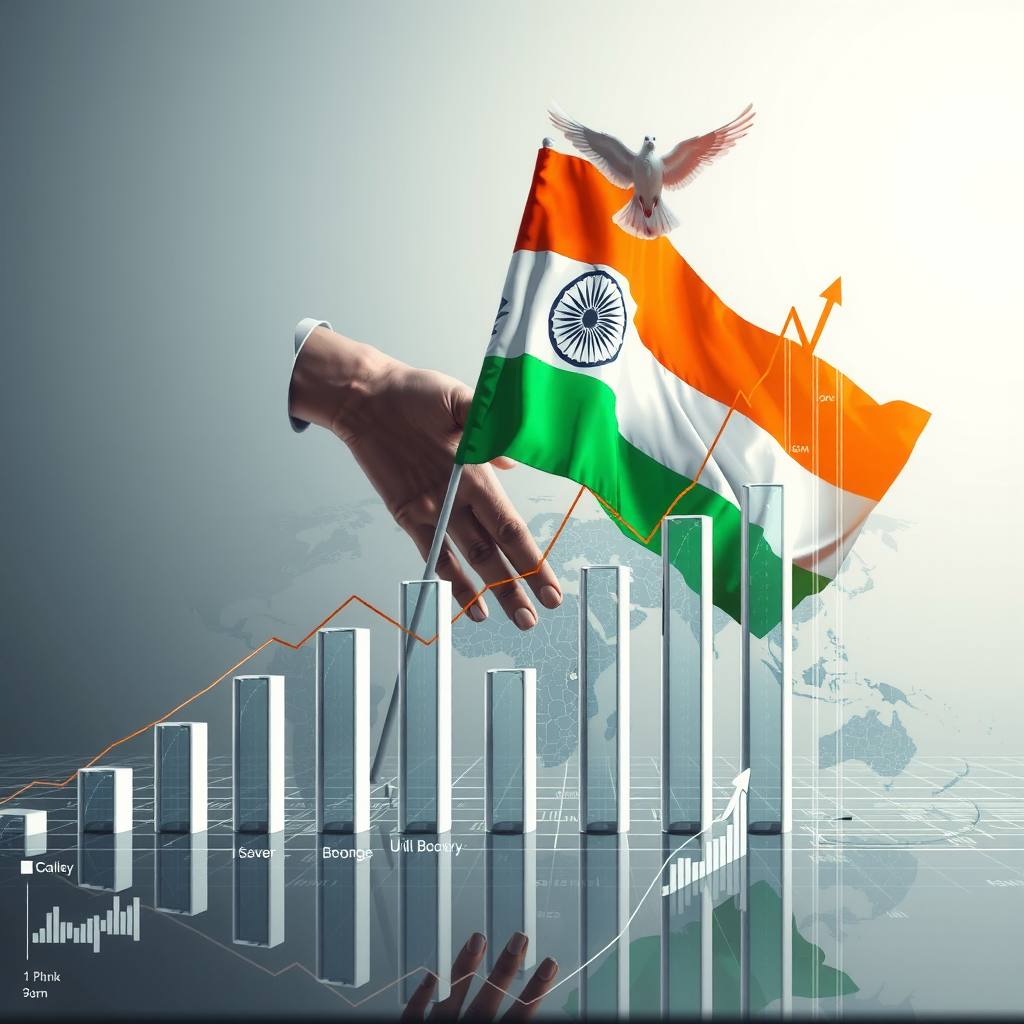
A Resurgent Growth Trajectory Bolstered by Easing Global Tensions
Global financial markets are constantly recalibrating in response to geopolitical shifts and commodity price dynamics. In a significant development for India, global investment banking giant Goldman Sachs has upgraded its real GDP growth forecast for the calendar year 2026 to 6.8%, an increase of 30 basis points from its earlier estimate of 6.5%. This optimistic revision, announced on June 26, 2026, primarily stems from a de-escalation of tensions in the Middle East following a US-Iran peace deal, which has subsequently led to lower crude oil prices and eased global supply disruptions. Coupled with India's inherent domestic economic resilience, this re-rating offers a more constructive outlook for investors, professionals, and businesses eyeing the Indian market.
The Geopolitical Pivot and its Oil Price Dividend
The recent US-Iran peace deal has emerged as a critical catalyst for this improved macroeconomic assessment. Geopolitical stability, particularly in oil-rich regions, directly impacts global crude prices, a crucial variable for import-dependent economies like India. Goldman Sachs now anticipates crude oil prices to average $82 per barrel in Q3-Q4 CY26, a notable reduction from its earlier projection of $92 per barrel. This downward revision in oil price forecasts significantly reduces a major tail risk for India's macroeconomic trajectory, as it limits the potential for additional fuel pass-through to consumers.
For India, a net importer of crude oil, lower global energy prices translate into substantial economic benefits. It alleviates pressure on the current account deficit, curbs imported inflation, and improves the government's fiscal space by reducing the subsidy bill for petroleum products and fertilizers. The removal of this external drag empowers domestic policy levers to focus more effectively on sustainable growth drivers.
Revised Macroeconomic Projections Signal Strength
Beyond the headline GDP figure, Goldman Sachs' revised projections paint a comprehensive picture of India's strengthening macroeconomic profile. The investment bank has also lifted its GDP growth forecast for the fiscal year 2027 to 6.5%, a 40 basis point increase from its previous estimate of 6.1%. This suggests a sustained positive momentum beyond the immediate horizon.
Crucially, the inflation outlook has also been recalibrated downwards, with the core inflation estimate now at 4.4%, a reduction of 0.2 percentage points. This brings inflation closer to the Reserve Bank of India's (RBI) comfort zone, potentially offering greater monetary policy flexibility. Furthermore, the current account deficit (CAD) forecast has been trimmed by 0.2 percentage points to 1.1% of GDP, reinforcing external stability. The Balance of Payments (BoP) is now expected to register a surplus of 0.7% of GDP this year, a robust indication of improving external buffers.
Underlying Domestic Resilience: A Strong Foundation
The upgrade is not solely predicated on external factors but also acknowledges India's robust domestic economic performance. The economy demonstrated stronger-than-expected activity in the first quarter of calendar year 2026, with real GDP growth printing at a significant 7.8% year-on-year. This expansion was primarily driven by resilient investment activity and robust growth in the services sector. High-frequency indicators in April and May, such as strong three-wheeler and passenger-vehicle sales, robust services exports, and firm manufacturing activity, further underscore this domestic resilience. Even as the latest HSBC Flash India PMI data for June indicated a moderation in growth momentum across manufacturing and services, the indices remained comfortably above the 50.0 threshold, signaling continued expansion, albeit at a slower pace.
Implications for Monetary Policy and Markets
The improved macro profile – higher growth, lower inflation, and a narrower current account deficit – significantly strengthens India's relative positioning among large emerging markets. For the RBI, easing inflationary pressures and a more stable external environment could create additional headroom for supportive monetary policy, although the central bank maintained its repo rate at 5.25% and a neutral stance in its June 2026 MPC meeting, citing global uncertainties.
For equity markets, a stronger growth outlook, coupled with potentially stable to lower interest rates (as inflation risks recede), bodes well for corporate earnings. Lower input costs from reduced crude prices can bolster profit margins across various sectors. The stabilization and slight appreciation of the Indian Rupee against the U.S. dollar, influenced by these positive shifts, could also attract further Foreign Portfolio Investments (FPIs), which have already shown a reduction in selling pressure in the latter half of June. Fixed income markets may also benefit from the improved inflation outlook.
Potential Headwinds and Expert Interpretation
While the outlook is largely positive, Goldman Sachs did flag some near-term headwinds. The bank expects consumption growth to moderate in Q2 and Q3 2026 as households absorb the impact of earlier pump price hikes, with some spillover into Q3. Weather-related uncertainty and forecasts of heatwaves by the Indian Meteorological Department also pose a near-term risk, particularly to rural consumption growth. However, the overall assessment suggests that these factors are unlikely to derail the broader constructive trajectory. The sustained growth and contained inflation profile solidify India's appeal as a prominent investment destination, offering a compelling narrative for long-term strategic positioning.
Balaji K


Comments
Post a Comment