India's Rupee Under Siege: FPI Exodus Prompts RBI Policy Conundrum
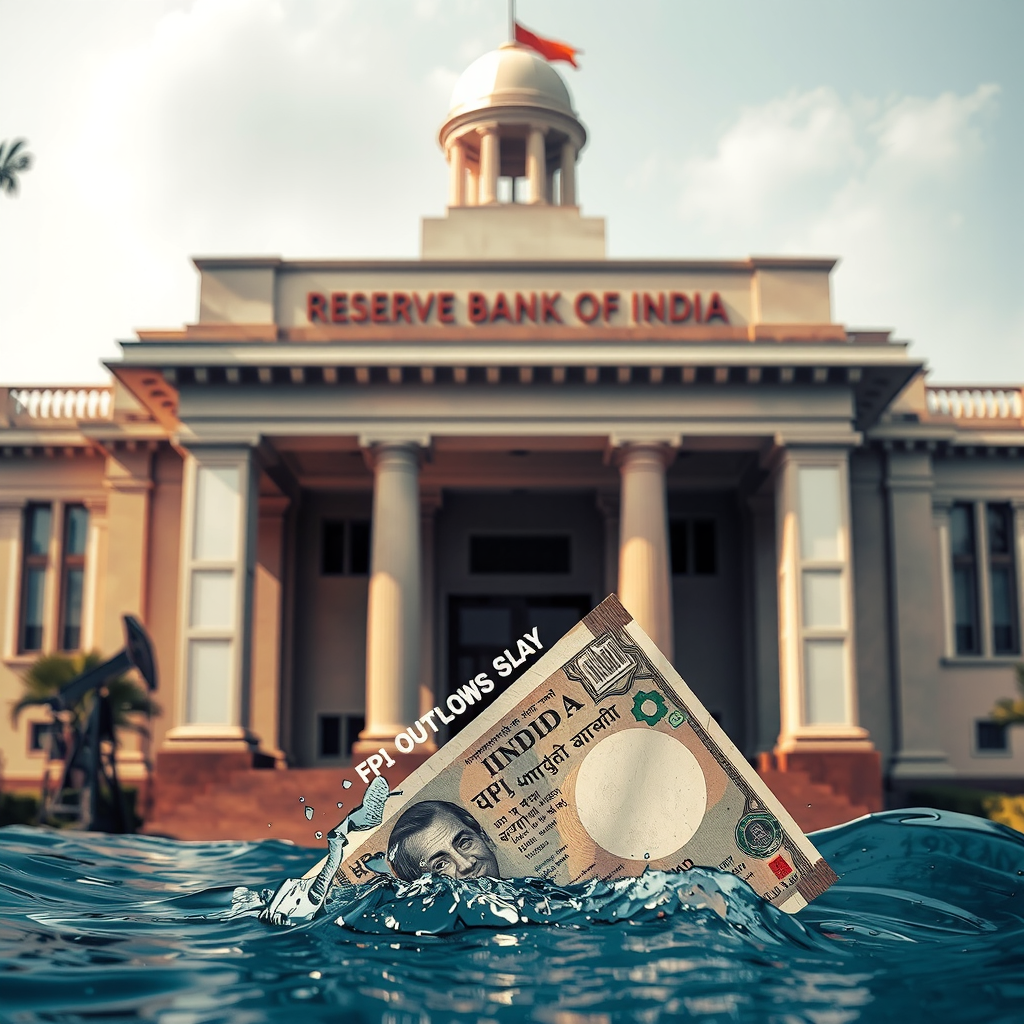
A Torrent of Outflows: The Rupee's Vulnerability Laid Bare
The Indian financial landscape is currently grappling with significant headwinds as Foreign Portfolio Investors (FPIs) continue their aggressive divestment from Indian equities. The month of May 2026 has witnessed a substantial exodus, with FPIs pulling out over ₹27,000 crore from the Indian equity markets thus far. This adds to a cumulative outflow exceeding a staggering ₹2.2 lakh crore for the year 2026, eclipsing the ₹1.66 lakh crore withdrawn during the entirety of 2025. This persistent selling pressure has positioned the Indian Rupee as Asia's worst-performing currency this year, recently breaching the critical 96-mark against the US dollar.
Global Tensions and Elevated Yields Drive Capital Flight
Several global macroeconomic factors are converging to fuel this capital flight. Elevated geopolitical tensions, particularly the ongoing Middle East conflict, have driven a surge in global crude oil prices. Brent crude, a key benchmark, touched $104.7 per barrel recently, and even peaked at $114 per barrel earlier in May. India, a net importer of crude oil, is acutely vulnerable to such price shocks, which inevitably widen its current account deficit and exert downward pressure on the domestic currency.
Furthermore, a stronger US dollar and persistently high US bond yields are enhancing the attractiveness of safer, developed market assets. This yield differential reduces the relative appeal of emerging markets like India, prompting global macro portfolio managers to de-risk their positions. Analysts at Morningstar Investment Research India have attributed the outflow trend to “persistent uncertainty surrounding global growth, elevated geopolitical tensions across key regions and volatility in crude oil prices,” alongside the “stronger U.S. dollar and elevated U.S. bond yields”.
The Rupee's Decline and Domestic Economic Impact
The rupee's depreciation is not merely a number on a screen; it has tangible implications for the Indian economy. For importing businesses, a weaker rupee translates to higher input costs, potentially stoking inflationary pressures. Conversely, exporters might see a short-term benefit, but sustained volatility can deter long-term planning and investment. The Reserve Bank of India (RBI) is in a challenging position, as indicated by recent reports suggesting it is considering various measures to stabilise the rupee, including potential interest rate hikes and more currency swaps.
While India's private sector growth remains robust, the latest HSBC Flash India PMI Composite Output Index for May 2026, at 58.1, shows a marginal easing from April's 58.2. This suggests a slight moderation in economic activity amidst the global headwinds. This dynamic complicates the RBI's policy choices; aggressive rate hikes to defend the currency could dampen growth, a risk the central bank is keen to avoid.
RBI's Policy Conundrum: Defend or Allow Adjustment?
The central bank faces a delicate balancing act. On one hand, intervening to defend the rupee can deplete foreign exchange reserves. On the other, allowing unchecked depreciation can lead to imported inflation and investor confidence erosion. Citigroup economists have suggested that India might implement tighter currency controls in the coming months, possibly restricting outward investment by Indian firms and enforcing stricter rules for exporters to repatriate foreign currency earnings more quickly.
There is also an ongoing debate within financial circles regarding the rupee's trajectory. Some analysts suggest that allowing the rupee to breach the psychological 100-mark against the dollar could establish a more market-driven equilibrium, potentially encouraging institutional funds to re-enter at a cheaper valuation once global energy pressures subside. However, the psychological impact of such a breach on domestic sentiment cannot be understated.
Outlook: A Calibrated Approach Amidst Volatility
The current environment demands a carefully calibrated policy response from Indian authorities. While the long-term growth story of India remains compelling, immediate challenges posed by global liquidity tightening and elevated commodity prices are undeniable. Investors will be closely watching the RBI's next moves, particularly its stance on interest rates and any measures to manage capital flows and currency volatility. The ability to navigate these cross-currents will be crucial in maintaining investor confidence and ensuring macroeconomic stability in the coming months.
Balaji K


Comments
Post a Comment