India's Market Resilience Tested Amidst FII Exodus and Mounting Macroeconomic Headwinds
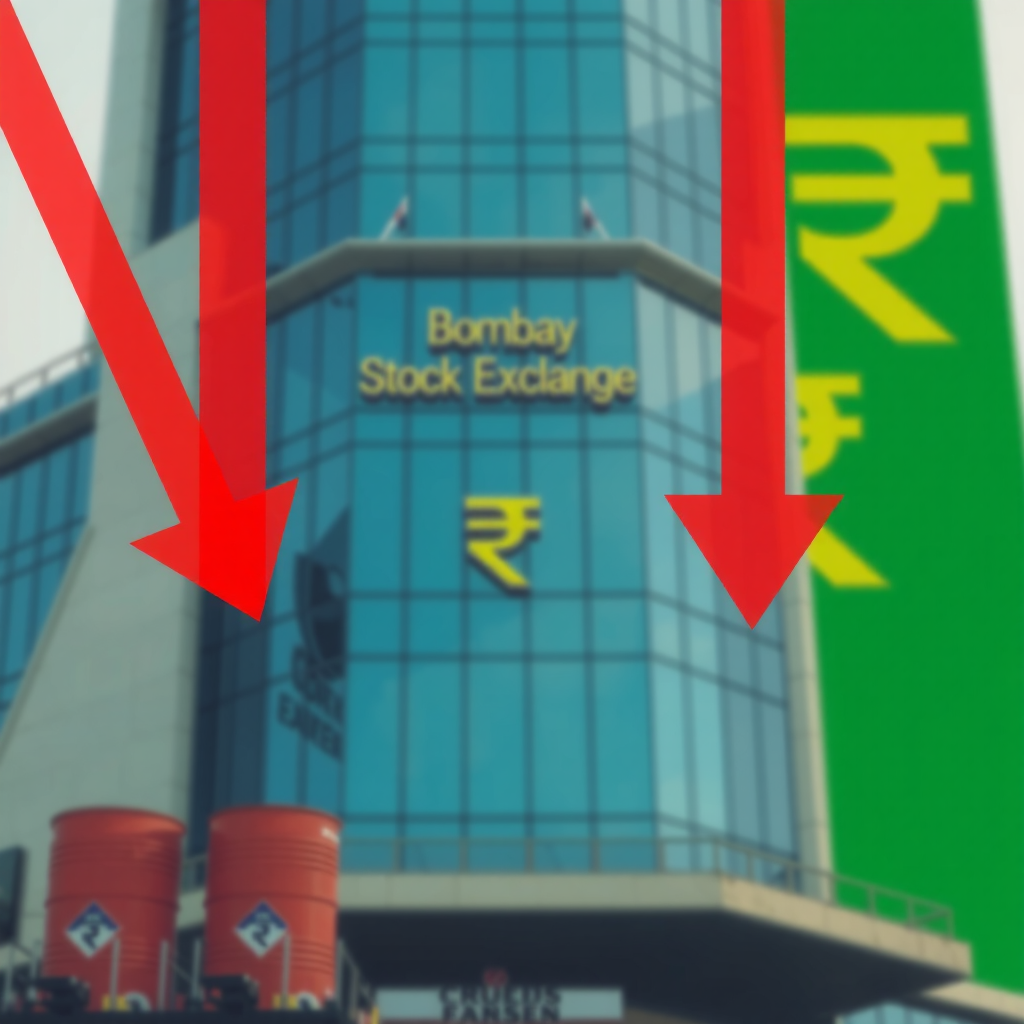
A Volatile Week on Dalal Street
The Indian equity markets concluded the final week of April 2026 on a decidedly weaker note, signalling a notable shift in investor sentiment that demands closer scrutiny. Dalal Street witnessed significant selling pressure, particularly in the technology sector, with the Nifty tech index experiencing a sharp decline of 10% over the past week. This downturn wiped out five weeks of gains and triggered a historic sell-off that analysts caution may not be over. The broader benchmark indices also felt the brunt, with the Nifty 50 declining 0.73% to settle at 24,000 and the BSE Sensex slipping 0.78% to close at 76,891 in the last trading session of April.
The Persistent FII Outflow Phenomenon
A primary driver of this market turbulence has been the relentless selling by Foreign Institutional Investors (FIIs). April alone saw FIIs offload shares worth a substantial ₹60,847 crore from Indian equities. This persistent selling trend has accumulated to a staggering ₹1.92 lakh crore in the first four months of 2026, already surpassing the total FPI withdrawals of ₹1.66 lakh crore for the entire calendar year 2025. This indicates a profound shift in foreign investor appetite, moving away from Indian assets. The outflows are largely attributed to a combination of elevated valuations in Indian equities, global macroeconomic uncertainties, and a general recalibration of risk across emerging markets.
Macroeconomic Pressures Intensify
Compounding the FII exodus are significant macroeconomic headwinds. Global geopolitical tensions, particularly the ongoing US-Iran conflict and its potential impact on the Strait of Hormuz, have led to a sharp rise in crude oil prices. Brent crude briefly crossed $100/barrel before settling in the $94–98 range. Given that India imports approximately 85% of its crude oil, every increment in oil prices translates directly into higher import bills, increased input costs for industries, and inflationary pressures domestically. This has been further exacerbated by the Indian rupee hitting a fresh record low, slipping to ₹93-94 per dollar, and swinging in an unusually wide range of ₹92.25–94.62. A weaker rupee makes imports costlier and reduces the returns for foreign investors in dollar terms, further disincentivising FII participation.
Disappointing Earnings and Valuation Concerns
The Q4 FY26 earnings season, which is now gaining pace with over 250 companies scheduled to release results, has also contributed to the cautious sentiment. Disappointing results and muted outlooks from key technology firms triggered a broad-based sell-off in the sector. This comes at a time when analysts have frequently pointed to stretched valuations in Indian equities. JPMorgan, reflecting these concerns, downgraded Indian stocks and sharply cut its base case year-end target for the Nifty to 27,000, marking a 10% downgrade from its earlier projection of 30,000 points. The market's fear gauge, India VIX, has risen to 19.71, indicating heightened nervousness among investors, though not yet panic. The Nifty P/E ratio stands at 20.85, aligning with its long-term average, suggesting that while not excessively expensive, the market is not a screaming buy either.
Implications for Investors and Businesses
The current market environment poses several challenges and opportunities. For investors, the volatility necessitates a re-evaluation of portfolios, with a focus on companies with strong fundamentals and resilient business models. Domestic institutional investors (DIIs) have attempted to absorb some of the FII selling, buying ₹9,782 crore during the week, but even they turned sellers by the end of the week, indicating the sheer scale of outflows. Businesses, particularly those reliant on imports or with significant energy consumption, will need to strategise for sustained higher input costs and currency depreciation. The government's continued focus on capital expenditure and initiatives like 'Make in India' and Production Linked Incentive (PLI) Schemes are critical in buttressing economic growth amidst these external pressures.
Outlook: Navigating the Uncertain Terrain
Looking ahead, the Indian market is likely to remain volatile and heavily news-driven. Key triggers to watch include the ongoing Q4 FY26 earnings announcements from major companies across sectors, the evolving US-Iran dynamic and its implications for crude oil prices, the movement of the Indian rupee, and the sustained trend of FII flows. While India's underlying economic fundamentals remain robust, with projections of 6.5% growth for 2026-27 by the IMF, the immediate market sentiment will be shaped by how these external and internal pressures unfold. Investors are advised to monitor these developments closely and adopt a disciplined, long-term perspective to navigate the current challenging landscape.
Balaji K


Comments
Post a Comment