India's Green Hydrogen Ambition: Navigating the Path from Policy to Profitable Prowess
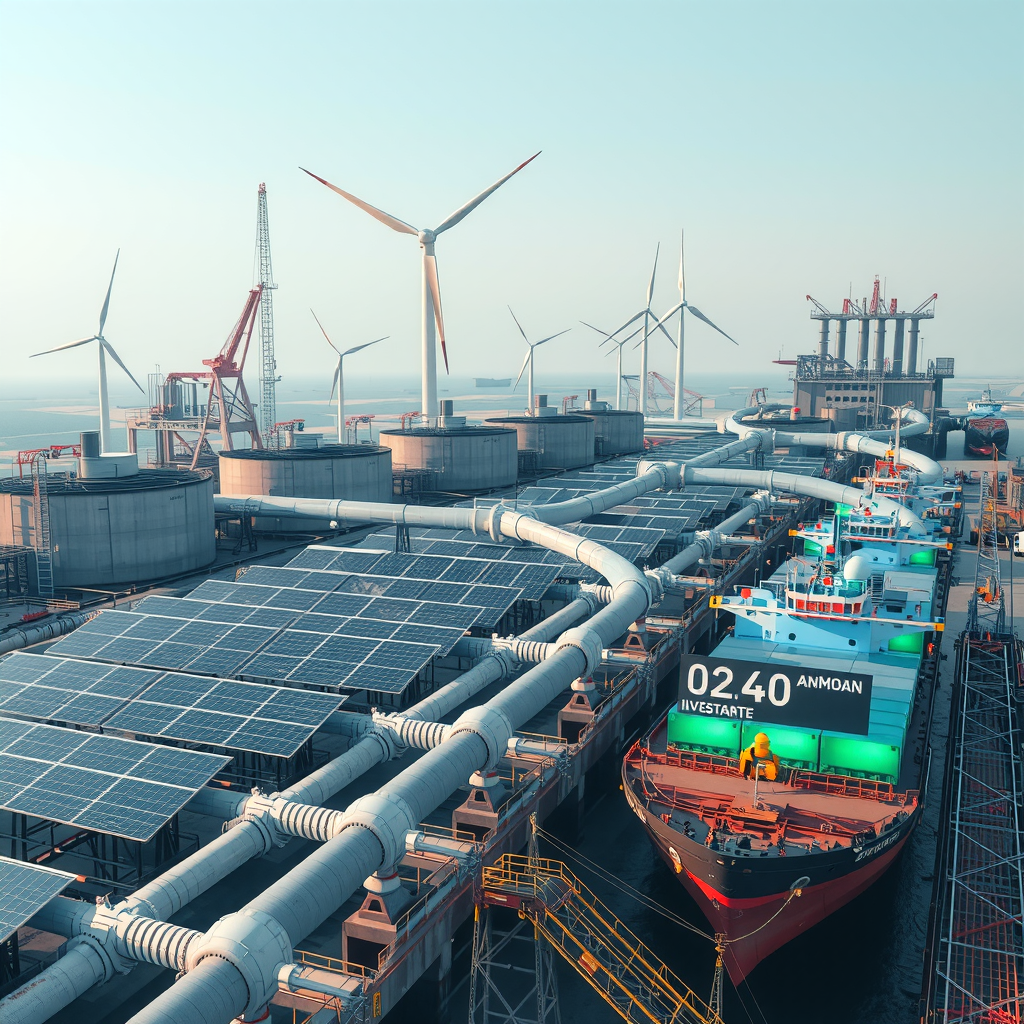
Charting a Sustainable Future: India's Green Hydrogen Mission at a Critical Juncture
India’s pursuit of a decarbonised economy and enhanced energy security has placed the National Green Hydrogen Mission (NGHM) at the forefront of its strategic initiatives. Launched in January 2023, the NGHM is not merely an environmental undertaking but a comprehensive industrial strategy designed to position India as a global leader in green hydrogen production, usage, and export. As a Chartered Accountant observing the financial landscape, the evolving trajectory of this mission presents a compelling case study for investors, businesses, and finance professionals, highlighting both immense opportunities and significant challenges.
The NGHM's ambitious targets underscore its transformative potential. The mission aims to achieve an annual green hydrogen production capacity of at least 5 million metric tonnes (MMT) by 2030, accompanied by approximately 125 GW of associated renewable energy capacity. This monumental shift is projected to attract over ₹8 lakh crore (approximately USD 96 billion) in total investments and generate more than 6 lakh jobs across the value chain by the end of the decade. Furthermore, the mission anticipates a cumulative reduction in fossil fuel imports exceeding ₹1 lakh crore (around USD 12 billion) and an abatement of nearly 50 MMT of annual greenhouse gas emissions by 2030.
Financial Architecture and Incentive Mechanisms
Central to the NGHM’s implementation is a robust financial architecture, with an initial budgetary outlay of ₹19,744 crore (USD 2.41 billion) up to the financial year 2029-30. A significant portion of this, ₹17,490 crore (USD 2.13 billion), is allocated to the Strategic Interventions for Green Hydrogen Transition (SIGHT) programme. The SIGHT programme comprises two distinct financial incentive mechanisms: one for the domestic manufacturing of electrolysers and another for the production of green hydrogen. Specifically, ₹4,440 crore is earmarked for electrolyser manufacturing, while ₹13,050 crore is dedicated to green hydrogen production incentives. These incentives, such as the production-linked incentives (PLI) for electrolyser manufacturing (starting at ₹4440 per kW in the first year) and green hydrogen production (capped at ₹50/kg in the first year), are crucial for enabling rapid scale-up, technology development, and cost reduction. Additionally, the government has introduced measures like the waiver of interstate transmission charges for renewable energy used in green hydrogen production and support for pilot projects in sectors like steel and mobility. These fiscal and non-fiscal measures aim to de-risk early investments and foster a conducive ecosystem for the nascent industry.
Investment Momentum and Emerging Market Opportunities
The policy push has already generated substantial investor interest. As of August 2025, India had 158 green hydrogen projects at various stages of development, with announced capacities significantly exceeding the 2030 target, indicating strong investor confidence. The Indian green hydrogen market, valued at USD 6.5 billion in 2025, is projected to reach USD 13.7 billion by 2032, exhibiting a Compound Annual Growth Rate (CAGR) of 11.5%. This growth is underpinned by India's competitive advantages, including some of the lowest renewable electricity costs globally, high solar irradiance, and a robust transmission infrastructure. Key sectors like steel, fertilisers, refineries, and transportation are actively exploring the substitution of grey hydrogen with green alternatives, driving domestic demand. India's strategic location and port infrastructure are also being leveraged to facilitate export opportunities, particularly to the EU, Japan, and South Korea.
Navigating the Roadblocks: Cost Competitiveness and Demand Certainty
Despite the optimistic outlook and policy support, significant challenges persist. A primary hurdle remains the cost competitiveness of green hydrogen. Currently, green hydrogen production in India is estimated to cost between $4 and $5 per kg, considerably higher than grey hydrogen, which ranges from $2.3 to $2.5 per kg. Bridging this cost gap is paramount for widespread adoption. The IEEFA highlights a critical concern: while there is significant supply-side momentum, long-term demand certainty from committed buyers is needed for projects to materialise effectively. This requires robust policy frameworks that not only incentivise production but also create demand through mechanisms like hydrogen purchase obligations and demand aggregation.
Furthermore, the development of adequate infrastructure for storage, transportation, and shared facilities is crucial for scaling up the industry. While regulatory frameworks are evolving, a more comprehensive and dedicated legislative piece for the entire green hydrogen supply chain is still awaited, as noted by industry experts.
Outlook for Investors and Businesses
For investors, the NGHM represents a frontier market with substantial long-term growth potential. Opportunities exist across the entire value chain, from renewable energy generation and electrolyser manufacturing to hydrogen production, storage, and end-use applications in various industrial sectors. However, a nuanced understanding of the evolving policy landscape, technological advancements, and market dynamics is essential. Businesses must focus on achieving economies of scale, optimising production efficiencies, and actively engaging in partnerships to mitigate risks and accelerate project development. The government's continued commitment to research and development (with ₹400 crore earmarked for R&D) and skill development programmes will also be vital in creating a sustainable green hydrogen ecosystem.
India's journey towards becoming a global green hydrogen hub is a testament to its commitment to sustainable growth. While the policy framework provides a strong foundation, the successful realisation of this ambition hinges on effectively addressing cost challenges, ensuring demand certainty, and fostering continued innovation and collaboration between public and private sectors. The coming years will be critical in demonstrating India's ability to translate its bold vision into tangible, profitable, and environmentally impactful realities.
Balaji K


Comments
Post a Comment