India's Cash Conundrum: A Surge in Currency and Mounting Liquidity Pressure
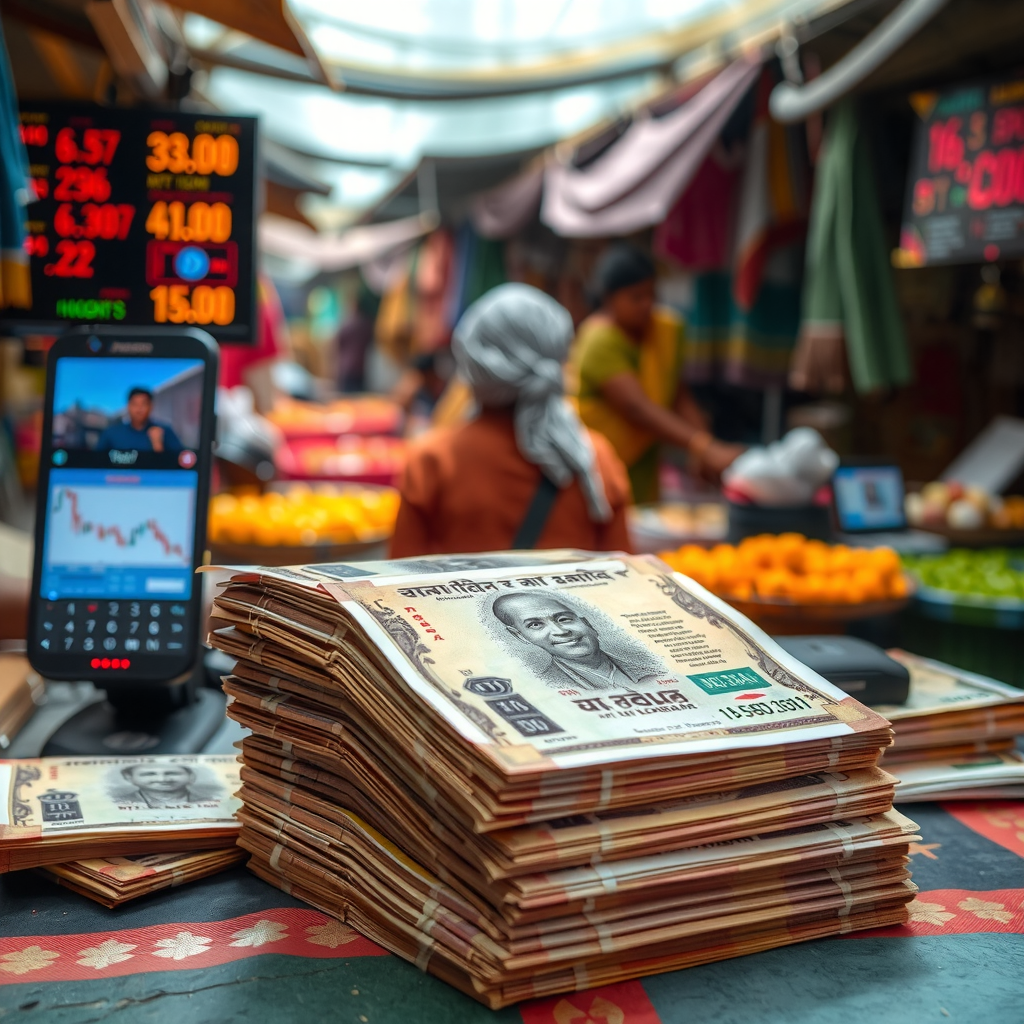
The Unseen Hand of Cash in India's Digital Economy
In an era increasingly defined by digital transactions and fintech innovation, a notable and somewhat counterintuitive trend has emerged within the Indian financial landscape: a significant surge in currency in circulation (CIC). Latest data reveals that India's cash withdrawals spiked by an impressive 12% in the first half of April, pushing the total currency in circulation to a record-breaking ₹42.3 trillion. This development, while seemingly at odds with the nation's ambitious digital payment push, carries profound implications for banking system liquidity, monetary policy, and the broader economic outlook, warranting close scrutiny from investors and financial professionals alike.
Decoding the Numbers: A Deep Dive into the Recent Surge
The Reserve Bank of India's (RBI) latest statistics highlight that currency in circulation in India swelled by over ₹610 billion ($6.40 billion) in the initial fifteen days of April alone. This substantial increase marks an 11.8% year-on-year rise, representing the highest growth rate observed since early 2017, a period immediately following the demonetisation exercise. This extended a trend of heightened cash demand witnessed over the preceding six months and throughout the last financial year, challenging the earlier perception of a subdued currency demand relative to GDP growth.
Multifaceted Drivers Behind the Phenomenon
Several factors appear to be coalescing to fuel this resurgence in cash usage. Economists point to robust rural demand as a primary catalyst. India's vast rural economy, where digital payment infrastructure, despite advancements, still faces adoption hurdles for everyday small-value transactions, inherently relies more on physical currency. A cut in the Goods and Services Tax (GST) on several daily-use items, implemented in September, also likely contributed by boosting consumption and, consequently, cash transactions. Furthermore, a low interest rate environment has provided additional impetus for cash usage, particularly in rural areas where the propensity to spend in cash is traditionally higher.
Another interesting, albeit less direct, contributor to the heightened CIC could be the elevated prices of precious metals. The recycling of gold and silver from households, often transacted in cash, might be adding to the liquidity pool of physical currency. This confluence of factors paints a nuanced picture, suggesting that while India's urban centres embrace digital, a significant portion of its economy continues to operate on a cash-preferred basis for a variety of socio-economic reasons.
Implications for Banking System Liquidity and Monetary Policy
The sustained surge in currency in circulation poses a tangible challenge to the surplus liquidity within the banking system, a condition the central bank has diligently endeavoured to maintain in support of economic activity. A continuous outflow of cash from banks into the public domain can tighten liquidity, potentially impacting lending rates and credit availability. HDFC Bank, for instance, anticipates the liquidity surplus to average around 1% of deposits in the first half of the current financial year (FY27), before moderating to 0.5% in the second half. However, this projection hinges on the assumption that the CIC trend does not escalate further.
Should the elevated demand for cash persist, possibly exacerbated by rising inflation or the financial dynamics surrounding upcoming state elections, the banking system's liquidity balances could come under further strain. For the RBI, this presents a delicate balancing act. The central bank must continue to foster digital adoption while simultaneously ensuring adequate liquidity to underpin economic growth, especially if inflationary pressures begin to build due to higher global crude oil prices, which have recently approached $100-115 a barrel.
Broader Economic and Market Significance
From an investor's perspective, this trend merits close observation. Tighter banking liquidity could translate into higher short-term interest rates, impacting corporate borrowing costs and equity valuations. Furthermore, the underlying reasons for the cash surge – particularly strong rural demand – offer insights into consumption patterns in the economy. While robust demand is positive, if it is primarily cash-driven and linked to inflationary expectations, it could signal underlying economic stresses. The financial markets will be keenly watching the RBI's response, should this trend continue to influence overall liquidity conditions and potentially necessitate adjustments in its monetary policy stance.
In conclusion, India's recent surge in currency in circulation is far from a minor statistical blip. It is a complex financial development with deep roots in the country's diverse economic fabric and significant ramifications for banking liquidity, inflation management, and the investment climate. As a Chartered Accountant, I view this as a critical indicator requiring continuous monitoring and careful analysis to accurately assess the trajectory of the Indian economy.
Balaji K


Comments
Post a Comment