India's Evolving Regulatory Landscape: Navigating RBI's Capital Market Norms and Tax Reforms
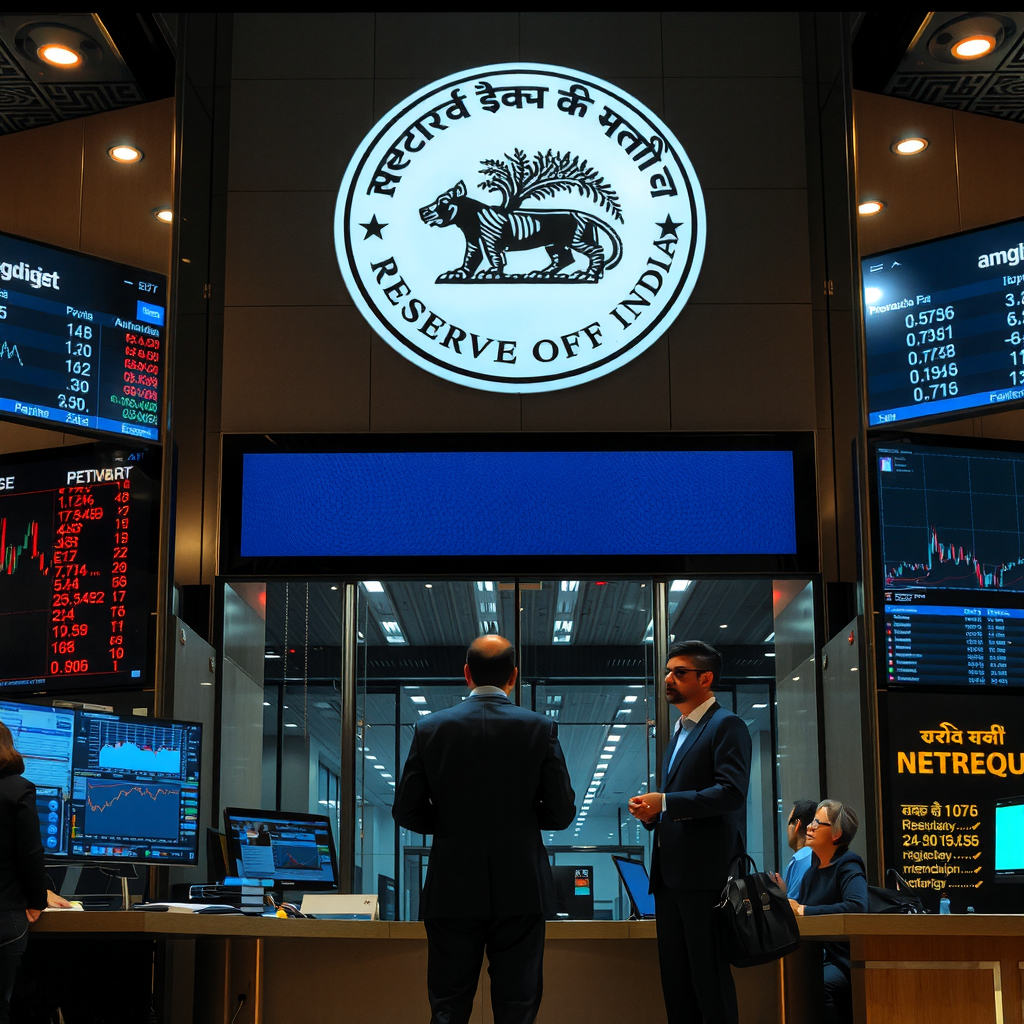
A Shifting Regulatory Tides for Indian Capital Markets
The Indian financial landscape is currently undergoing a significant metamorphosis, driven by a series of regulatory adjustments primarily aimed at enhancing market stability, transparency, and investor protection. As the new fiscal year commenced on April 1, 2026, market participants began to grapple with critical changes to taxation and capital market operations. While some key reforms were implemented as planned, the Reserve Bank of India (RBI) demonstrated its responsive approach by deferring the full implementation of certain capital market exposure norms, highlighting an adaptive regulatory environment for financial institutions and businesses.
RBI's Adaptive Stance on Capital Market Exposures
Central to the ongoing regulatory recalibration are the RBI's Amendment Directions concerning capital market exposures, originally issued on February 13, 2026. These directives aimed to establish a more robust framework for banks financing corporate acquisitions and to rationalize lending limits against shares and units of Real Estate Investment Trusts (REITs) and Infrastructure Investment Trusts (InvITs). Initially slated for implementation on April 1, 2026, the RBI, responding to extensive feedback from banks, capital market intermediaries (CMIs), and industry associations citing operational and interpretational challenges, announced a three-month deferral. The revised effective date for these comprehensive norms is now July 1, 2026.
This deferral, communicated via a circular on March 30, 2026, was accompanied by crucial clarifications. The definition of acquisition finance has been expanded to explicitly include mergers and amalgamations, provided the acquisition targets non-financial companies and the acquiring firm meets 'potential synergy' criteria. Banks are now also allowed to extend funding backed by 100% cash or cash-equivalent collateral and, notably, the prohibition on financing market makers for securities used in such operations has been lifted. This represents a measured move to streamline lending for corporate deals while ensuring prudent risk management, potentially unlocking incremental lending capacity for major banks such as State Bank of India, HDFC Bank, ICICI Bank, and Axis Bank, which market trackers estimate could range between ₹50,000-75,000 crore.
Concurrent Tax Regime Overhauls Impacting Investments
Simultaneously with the RBI's evolving framework, the new fiscal year ushered in significant adjustments to India's tax regime, directly impacting trading activity and investment strategies. One of the most impactful changes is the increase in the Securities Transaction Tax (STT) rates for derivative trading. As per the Union Budget 2026-27, the STT on the sale of futures has risen from 0.02% to 0.05%, while the rate on options premiums has increased from 0.1% to 0.15%, effective from April 1, 2026. This hike is poised to increase the cost of high-frequency speculative trades, potentially influencing the trading volumes and strategies of F&O participants.
Further, the tax treatment for share buybacks has undergone a complete overhaul. Effective April 1, 2026, income derived from buybacks is now classified as capital gains, a significant departure from its previous treatment as dividend income. Under the revised system, individual promoters will face a tax rate of 30%, while promoter companies will be subject to a 22% tax rate. This change aims to simplify the taxation process but will require re-evaluation of corporate restructuring and capital allocation strategies by businesses and investors alike. Additionally, taxation rules for Sovereign Gold Bonds (SGBs) have been revised, limiting the tax-free maturity benefit exclusively to original subscribers, meaning investors acquiring SGBs from the secondary market will now incur capital gains tax upon maturity.
Broader Economic Context and Outlook
These regulatory and tax reforms are unfolding against a backdrop of resilient Indian economic performance. The United Nations Economic and Social Commission for Asia and the Pacific (ESCAP) recently projected India's economy to expand by 6.4% in 2026 and 6.6% in 2027, with inflation expected to remain stable at 4.4% in 2026 and 4.3% in 2027. While global foreign direct investment (FDI) inflows into developing Asian and Pacific economies experienced a decline, India continued to attract significant greenfield FDI, recording $50 billion in announced investments in the first three quarters. The market reacted positively to broader global cues easing geopolitical tensions, with benchmark indices like the Nifty 50 seeing gains, particularly in the mid-cap and small-cap segments. The RBI's proactive measures to stabilize the Indian Rupee against the US Dollar have also provided a comfort factor, maintaining stable import costs, especially for oil.
Implications for the Financial Ecosystem
The confluence of these regulatory shifts signals a maturing and increasingly sophisticated Indian financial market. For investors, a clear understanding of the revised tax implications on derivatives and buybacks is crucial for optimizing returns and managing costs. Businesses undertaking mergers and acquisitions will find the clarified RBI norms beneficial, albeit with increased scrutiny on strategic intent. The deferral of the full capital market exposure norms also provides banks and financial intermediaries additional time to align their operations, ensuring smoother implementation and minimizing market disruptions. The adaptive nature of Indian regulators, balancing growth impetus with risk mitigation, is likely to further strengthen the resilience and attractiveness of India's financial ecosystem for both domestic and international capital.
Balaji K


Comments
Post a Comment