India's Accelerated Green Manufacturing Drive: A Blueprint for Sustainable Growth and Investment
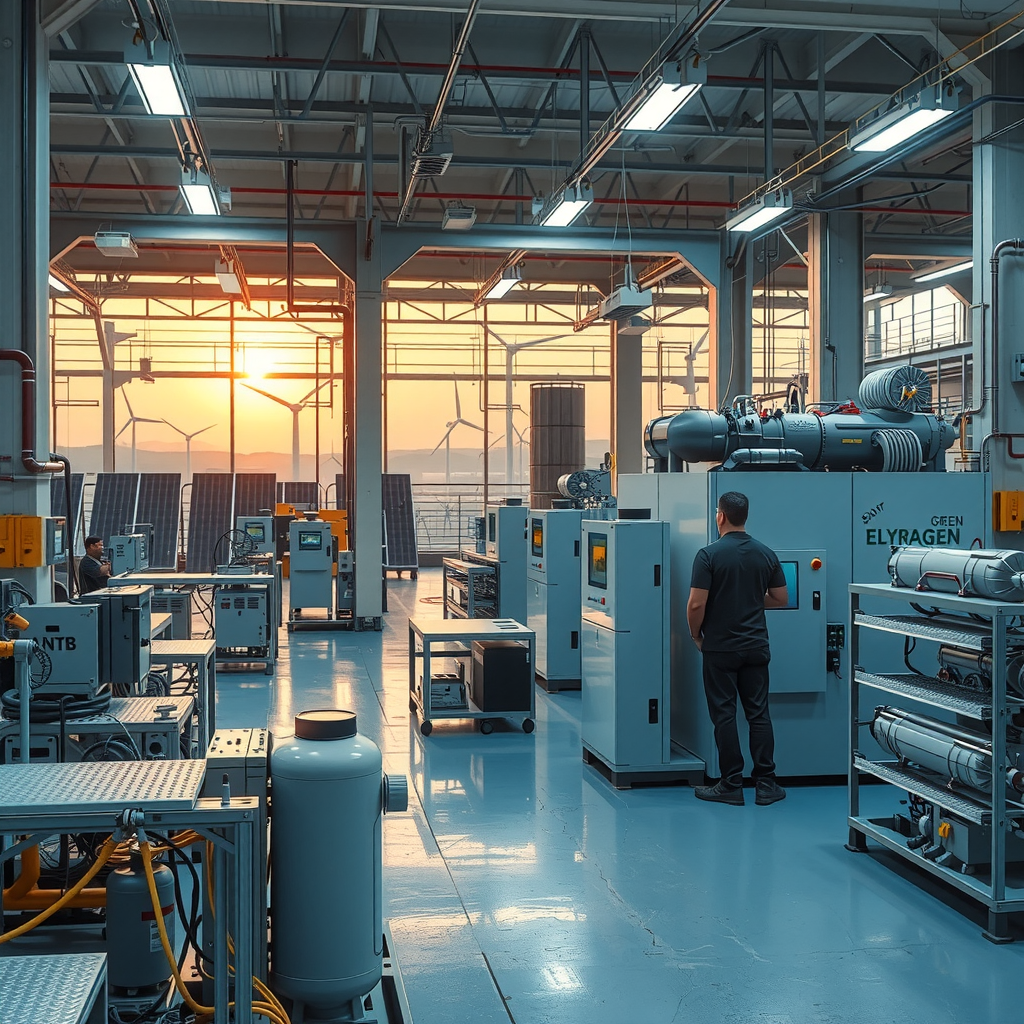
The Imperative for Domestic Green Technology Manufacturing
In a significant push towards energy independence and sustainable industrialisation, India has intensified its focus on developing a robust domestic manufacturing ecosystem for green technologies, particularly in advanced battery storage and green hydrogen production. Recent policy announcements and strategic initiatives underscore the government's commitment to transforming India into a global hub for clean energy manufacturing, a development poised to reshape investment landscapes and business strategies. This renewed vigour, evident in the past week's developments, signals a critical juncture for investors, professionals, and businesses navigating India's rapidly evolving economy.
India's ambitious climate commitments, including achieving net-zero emissions by 2070 and securing **500 GW** of non-fossil fuel capacity by 2030, are the primary drivers behind this strategic pivot. As of late 2025, India's non-fossil fuel capacity had already surpassed **250 GW**, accounting for over **51%** of its installed power capacity—a remarkable five years ahead of the 2030 target. This accelerated transition demands a corresponding scale-up in indigenous manufacturing capabilities to mitigate import reliance and build resilient supply chains.
Advanced Battery Storage: Powering India's Electric Future
A cornerstone of India's green manufacturing strategy is the vigorous development of its advanced battery storage ecosystem. The government is embarking on a multi-billion-dollar initiative, planning to invest approximately $18 billion to establish **47 gigawatts (GW)** of battery storage capacity, forming a central tenet of the 'India Battery Vision 2047'. This comprehensive vision spans the entire battery value chain, from critical mineral sourcing to recycling.
A key policy mechanism bolstering this ambition is the Production-Linked Incentive (PLI) scheme for Advanced Chemistry Cell (ACC) battery storage. Initially approved in May 2021 with a budgetary outlay of ₹181 billion (approximately US$2.17 billion), the scheme targets the establishment of **50 GWh** of Giga-scale ACC manufacturing capacity within India. As part of recent advancements, three prominent companies – Reliance New Energy Limited, Ola Electric Mobility Private Limited, and Rajesh Exports Limited – have signed program agreements under this PLI scheme, signaling significant private sector engagement.
However, the execution of the ACC PLI scheme has faced challenges, with only **1.4 GWh** (representing a mere **2.8%**) of the targeted 50 GWh capacity commissioned as of early 2026. This highlights the complexities inherent in establishing high-tech manufacturing at scale, including the need for robust R&D, a skilled workforce, and stable policy environments. To address these, the government recently announced the creation of an Approved List of Battery Manufacturers (ALBM), designed to prioritize domestic producers for government-backed projects and further reduce import dependence. Draft norms and a phased localisation timeline for the ALBM are anticipated within the current fiscal year.
Green Hydrogen: The Next Frontier in Decarbonisation
Parallel to the battery storage push, India is making strategic strides in green hydrogen production, positioning it as a pivotal element in decarbonising hard-to-abate sectors like steel, refining, and fertilisers. The Strategic Interventions for Green Hydrogen Transition Programme (SIGHT) acts as India's PLI-like scheme for this sector, offering financial incentives for both domestic electrolyser manufacturing and green hydrogen production.
Under the SIGHT programme, incentives have already been awarded for **3,000 MWPA** (MegaWatt per annum) of domestic electrolyser manufacturing capacity. While current reported green hydrogen production capacity stands at approximately **8,000 tonnes per annum** as of March 2026, against an ambitious target of **5 million tpa by 2030**, significant scale-up is still required. The Union Budget 2026-27 allocated **₹600 crore** for the National Green Hydrogen Mission, signaling continued governmental support. Additionally, the Green Hydrogen Certification Scheme of India, launched in April 2025, and the issuance of official standards for Green Ammonia and Green Methanol in February 2026, demonstrate a concerted effort to establish a comprehensive regulatory and market framework.
Investment Implications and Economic Outlook
The government's steadfast commitment to green manufacturing, underscored by the Union Budget 2026-27's increased allocations and customs duty exemptions for related capital goods, presents substantial investment opportunities. The PLI scheme for ACC batteries alone is projected to boost India's economic output by **$19.39 billion** and generate over **1 million** new employment opportunities, with battery production accounting for a significant portion of these jobs. India's economy is forecast to expand by **6.4% in 2026** and **6.6% in 2027**, with green industrial development identified as a key growth driver.
For investors, this translates into burgeoning prospects across the green energy value chain, from manufacturing of cells, modules, and electrolysers to infrastructure development for charging and hydrogen refuelling. Domestic and international players in renewable energy generation, electric vehicles, and specialized component manufacturing are poised to benefit. However, navigating this landscape requires a keen understanding of the phased implementation, evolving localisation norms, and the need for significant capital expenditure and technological prowess. While challenges in meeting initial targets persist, the long-term strategic vision and consistent policy support suggest a transformative period for India's industrial sector, offering compelling opportunities for those prepared to invest in sustainable growth.
Balaji K


Comments
Post a Comment